


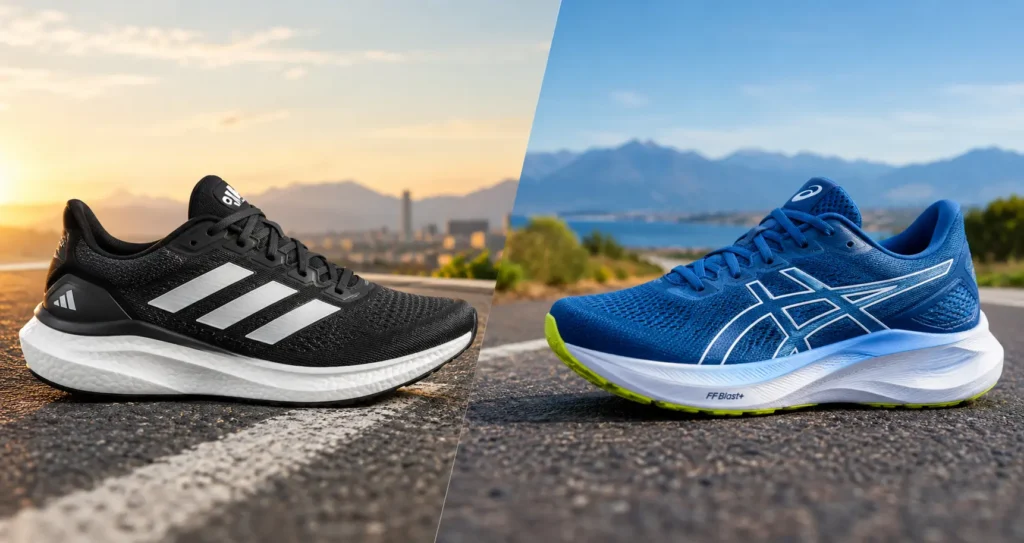
B
oth brands show up constantly in marathon training plans, and for good reason — they’re genuinely two of the strongest names in long-distance running right now. But they approach the distance differently enough that the right pick really depends on what you personally need from a shoe over 10, 13, or 26 miles.
The Core Philosophy Difference
ASICS has built its entire brand identity around running specifically, with long-standing sponsorships of major marathons and partnerships with elite distance athletes like Deena Kastor. According to HEAT OF°, that focus shows in the shoes themselves — ASICS leans into stability and structure, built for genuinely serious training rather than general athletic versatility.
Adidas takes a different approach, prioritizing a lighter, more dynamic, responsive feel. The brand positions itself as more of an all-rounder — a shoe that works for running training and still looks and feels natural strolling around town afterward, rather than a pure performance tool.
Fit: Where The Real Difference Shows Up
This is genuinely one of the most practical distinctions between the two brands for long-distance runners specifically. According to RealSport101, Adidas tends to run slightly shorter and offers a snugger, more locked-in feel, especially around the heel and midfoot. ASICS, by contrast, typically offers more room in the toe box, which becomes a real advantage on high-mileage runs, since feet naturally swell over the course of a long effort.
If you’re deciding purely based on long-distance comfort, that extra toe box room is worth taking seriously — a shoe that fits perfectly at mile two can feel genuinely cramped by mile eighteen if it doesn’t leave room for natural foot swelling.
Top Picks For Long Runs From Each Brand
On the ASICS side, the ASICS MEGABLAST has been tested and ranked as the best overall long-distance running shoe currently available, according to RTINGS, scoring highly on both long-run performance and cushioning specifically. The long-running ASICS GEL Nimbus line remains a go-to recommendation for easy or long run days specifically — reviewers describe it as better suited to a five-hour marathon pace with real cushion and support, rather than a fast race-day shoe.
On the Adidas side, the adidas Adizero Prime X3 STRUNG stands out specifically for long runs, combining strong impact protection with even better energy return than the ASICS MEGABLAST in testing. The trade-off: it runs notably narrow through the arch, and its high stack height makes it considerably less stable underfoot than the MEGABLAST — a real consideration for anyone who needs more lateral stability over long distances.
Durability
Both brands hold up reasonably comparably over time, though the specific numbers differ slightly.Adidas running shoes generally have a life expectancy ranging from 300 to 500 miles, or roughly three to six months depending on monthly mileage.ASICS recommends swapping shoes out every 450 to 500 miles. For serious long-distance runners logging high weekly mileage, that gap is worth factoring into your overall cost comparison, since ASICS’ slightly longer recommended lifespan can offset part of any price difference over a full training cycle.
What Real Runners Say
Runner feedback on this comparison tends to split along the same lines as the brands’ core philosophies. According to Honest Brand Reviews, for distance days specifically, a lot of runners gravitate toward Adidas for staying balanced and responsive even as the miles add up, with Continental rubber outsoles providing strong traction across different surfaces and conditions. ASICS shoes, meanwhile, get consistent praise for how well they perform across different training contexts — not just running, but general training and marathon prep as well, with some runners specifically describing a smoother, lower-impact feel during long efforts.
So Which Should You Actually Choose?
If stability and structure matter most to you — particularly if you’re prone to overpronation or you simply prefer a more supportive, grounded ride over long distances — ASICS is generally the stronger pick, and the brand’s deeper roots specifically in distance running culture back that up. If you prioritize a lighter, more responsive, dynamic ride and want a shoe that works equally well for a long run and everyday wear afterward, Adidas tends to be the better fit.
Neither brand is objectively superior for long distance — it genuinely comes down to your running style, foot shape, and whether you prioritize stability or responsiveness on race day. Trying on both, ideally with a few miles logged in each before committing to a full marathon training cycle, remains the most reliable way to figure out which philosophy actually suits your stride.
The Bottom Line
ASICS leans into stability, structure, and a dedicated distance-running pedigree that shows up clearly in shoes like the GEL Nimbus and MEGABLAST.Adidas leans into a lighter, more versatile, responsive ride that holds up well across long runs while still working as an everyday shoe. Both are genuinely capable of carrying you through serious marathon training — the right choice is really about which ride philosophy matches how your feet and your running style actually want to move.