


P
icking the right running shoe feels harder than it should.Walk into any store and you’ll face dozens of models with confusing names and specs.However once you understand your foot type, the whole process gets much simpler.
This guide breaks down exactly what to look for, without the technical jargon.
Why Your Foot Type Matters So Much
Every foot moves differently when it hits the ground.That movement known as pronation, affects how much support and cushioning you actually need.Therefore wearing the wrong shoe can lead to shin splints, knee pain, or blisters.
Runners often blame their shoes for discomfort and sometimes that’s fair.In fact most fit issues trace back to skipping this simple step.Once you know your foot type, shopping becomes far less stressful.
The Three Main Foot Types
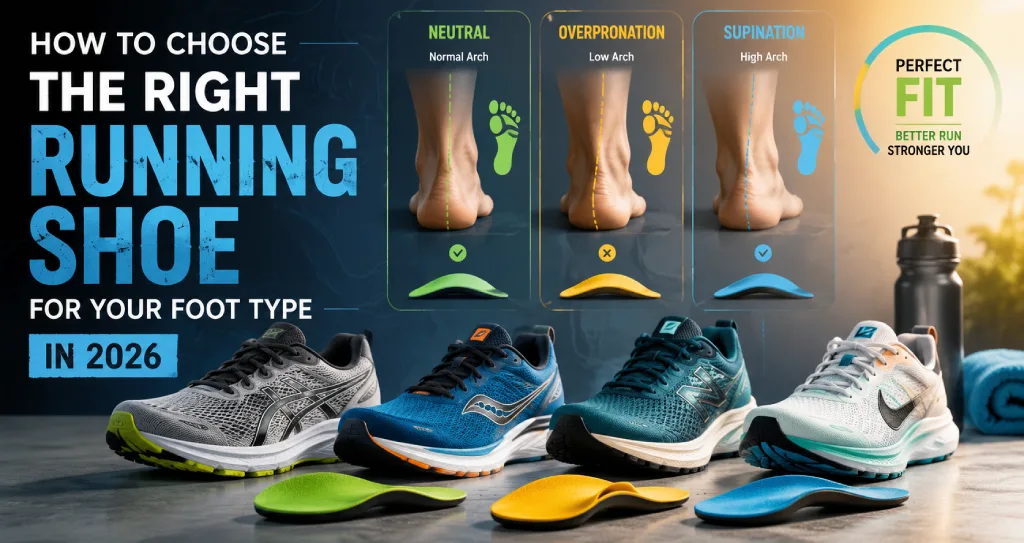
Most runners fall into one of three categories: neutral, overpronated, or underpronated.Neutral feet roll slightly inward at a healthy angle.Overpronated feet roll inward too much, while underpronated feet barely roll inward at all.
How To Choose the Right Running Shoe: The Wet Test
You don’t need a lab to figure out your foot type.Wet the bottom of your foot then step onto a piece of paper or cardboard.The shape of your footprint tells you almost everything.
A footprint showing most of your foot suggests flat arches and overpronation.Meanwhile, a footprint showing just a thin strip along the outside points to high arches.A balanced print with a moderate curve usually means neutral pronation.
What Each Result Means For Shoe Shopping
Flat-footed runners typically need stability or motion-control shoes.These models add extra support along the inner sole to limit excess rolling.On the other hand, high-arched runners benefit from cushioned, flexible shoes that encourage natural movement.
Neutral runners have the easiest job here. Most standard running shoes work well, since your foot already moves efficiently. That said, personal comfort still matters more than any label.
Beyond Pronation: Other Factors To Consider
Foot type isn’t the only thing that affects your shoe choice.Your running surface plays a role, too.Trail runners need grippier soles, while road runners benefit from smoother lighter designs.
Additionally your weekly mileage matters more than people expect.Higher mileage usually calls for more cushioning to protect your joints.Beyond that your body weight can influence how much support you truly need.
Fit Still Beats Every Spec Sheet
No matter how perfect a shoe looks on paper, fit always comes first.Your toes should have a bit of wiggle room up front.Furthermore your heel shouldn’t slip when you walk or jog in place.
Shop later in the day, since feet swell slightly with activity.Fortunately most running stores now offer free gait analysis to confirm your foot type.Take advantage of that service before committing to a pair.
Common Mistakes Runners Make
Many runners buy shoes based on looks or brand loyalty alone.That approach often backfires once real mileage sets in.Instead prioritize function first and let style come second.
Overall replacing worn-out shoes on time matters just as much as choosing the right pair.Most running shoes lose their cushioning after 300 to 500 miles.As a result holding onto old shoes too long increases your injury risk.
Final Thoughts
Choosing the right running shoe for your foot type takes a little effort but it pays off fast.Once you understand your pronation pattern, narrowing down options becomes simple. In fact, the right pair can completely change how running feels on your body.
Take the wet test, visit a specialty store if you can, and trust how the shoe actually feels on your foot.