


T
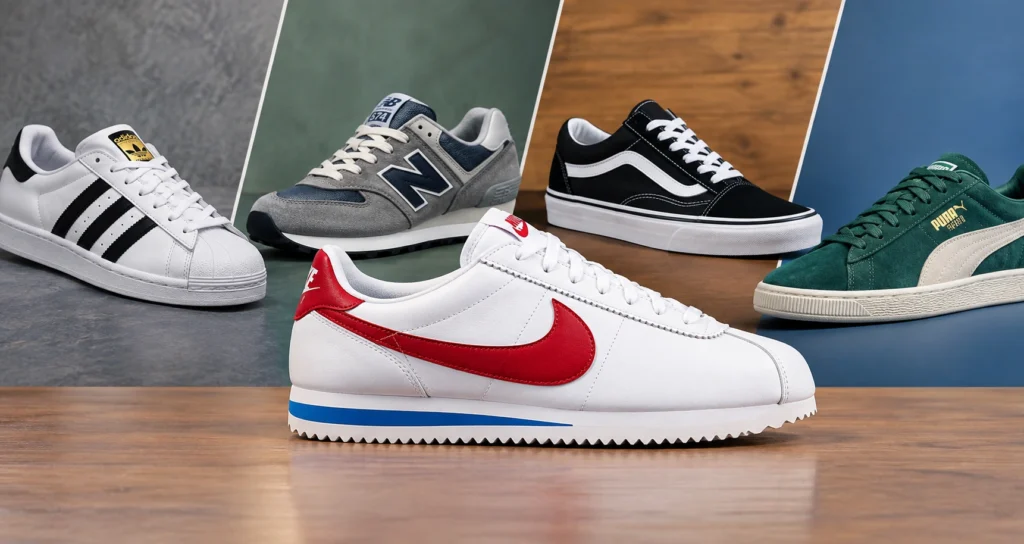
he retro sneaker category has gotten genuinely crowded over the past couple of years. Adidas Sambas dominated the conversation almost entirely for a stretch, and now that saturation has pushed a wave of alternatives into the spotlight — the Nike Cortez chief among them. But “retro” doesn’t mean interchangeable. Each of these shoes carries a different heritage, a different fit, a different price point, and a genuinely different styling outcome depending on what’s already in your closet. Here’s a detailed look at how the Cortez actually stacks up against its main competitors.
A Quick Refresher On What The Cortez Actually Is
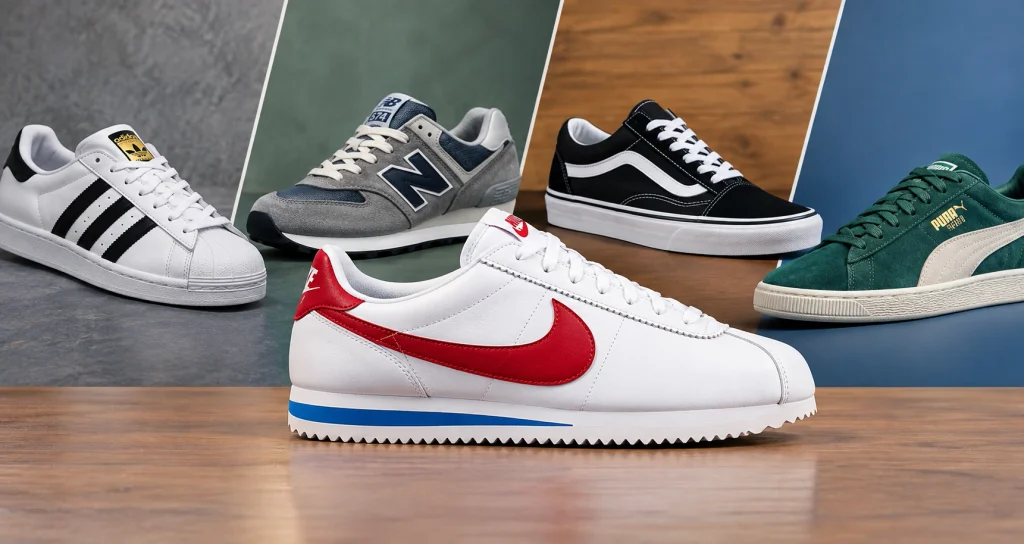
Before diving into comparisons, it’s worth understanding what makes the Cortez distinct in the first place. It debuted in 1972, designed by Nike co-founders Bill Bowerman and Phil Knight as one of the brand’s earliest shoes — originally under the working name TG-24 before eventually becoming the Cortez.It was built as a genuine performance running shoe, featuring a full-length foam midsole that was a real technical innovation at the time.That running-shoe DNA still shows up in the silhouette today: a slightly taller heel, a more curved sole profile, and noticeably more cushioning than most of its terrace-style competitors, which were originally built for football pitches and indoor courts rather than long-distance running.
Nike Cortez vs. Adidas Samba

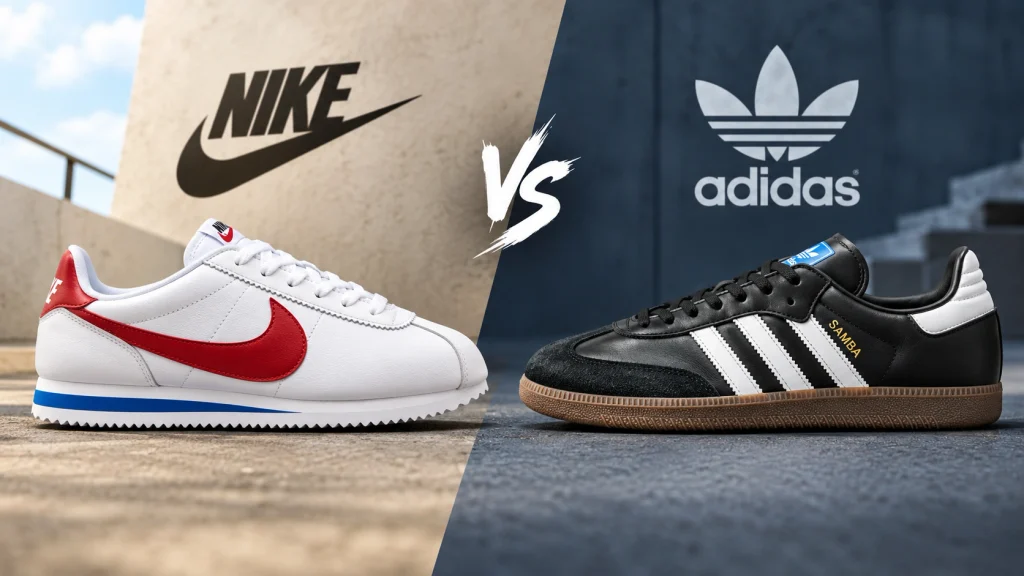
This is the most common comparison in the current sneaker conversation, and for good reason — both are widely considered the two flagship names in the ongoing retro sneaker wave. According to Extrabux, the choice ultimately comes down to personal priorities: the Cortez wins out for buyers who prefer lightweight construction and a wider range of color options, while the Samba leans into a snugger, more structured fit built around genuine soccer and futsal performance heritage.
Fit is where the two diverge most noticeably in actual wear. Per Crosby Shoe Repair, the Samba offers a snug, supportive fit ideal for indoor court surfaces, while the Cortez runs slightly narrower overall, appealing more to buyers who prefer a slimmer profile through the midfoot. If you have wider feet, neither shoe is an automatic win — both require some attention to sizing — but the Cortez’s narrower cut specifically is worth knowing about before ordering online.
Culturally, the two shoes also draw from entirely different stories.The Samba’s identity is rooted in football heritage and European terrace culture, a look that’s been continuously reinforced by collaborations with brands like Wales Bonner and Pharrell Williams’ Human Race, which introduced unexpected variations like crochet stitching and bold chrome colorways that helped extend the shoe’s cultural relevance. The Cortez, by contrast, draws its identity from 1970s American distance running and West Coast street culture, later cemented in mainstream pop culture through its appearance in Forrest Gump. Neither story is objectively “better” — it really comes down to which aesthetic your existing wardrobe and personal style already lean toward.
Nike Cortez vs. Adidas SL 72
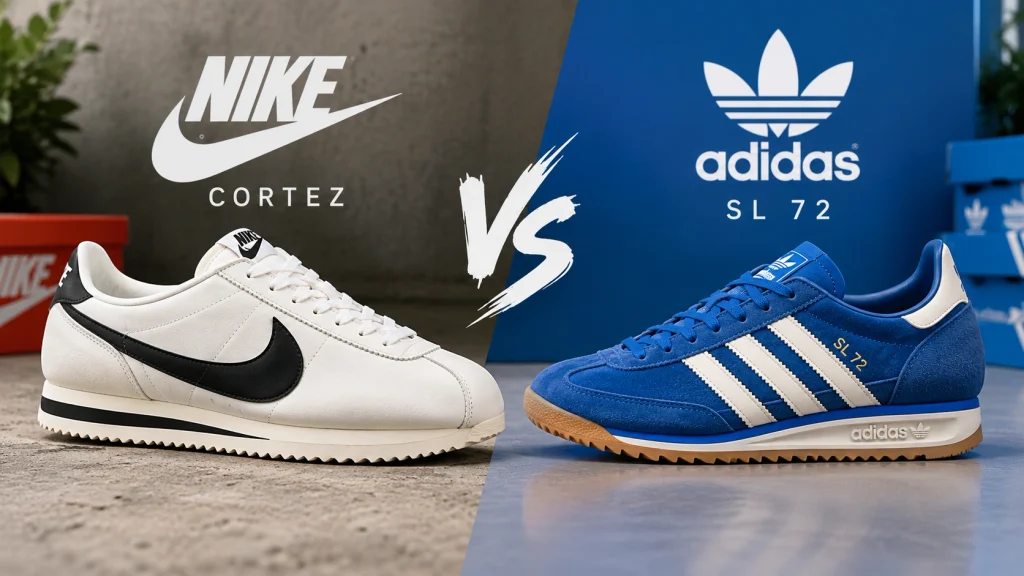
As Samba fatigue has genuinely set in among fashion-forward buyers, the Adidas SL 72 has emerged as one of the most talked-about direct alternatives, positioned by several style publications as the natural next step for anyone moving on from the Samba specifically. According to ShopBack, the Cortez actually runs closer to true-to-size than the Samba does, though it remains on the narrow side for wide-footed wearers — most buyers who size up half a size in the Samba can generally order true-to-size in the Cortez instead. The SL 72, meanwhile, carries a rounder toe box and a noticeably taller heel that gives its profile more forward lean compared to the flatter Cortez sole.
Originally built for the 1972 Munich Olympics as a lightweight running trainer, the SL 72 carries genuine retro-athletic credentials without the Samba’s current cultural saturation. Adidas has quietly expanded the range through recent years with new colorways in both suede and nylon, along with a taller-heeled SL 72 RS variant, and the shoe has picked up strong editorial attention in publications like Grazia as one of the next low-profile Adidas options worth watching.
The practical distinction worth remembering: the SL 72 reads as more overtly retro and considerably less recognizable to the average person right now compared to the Cortez, which some buyers actually see as an advantage — wearing a less mainstream shoe signals that you’re following the broader sneaker catalog closely rather than simply chasing whatever’s most visible on social media at the moment. The Cortez, by contrast, already carries enough mainstream recognition that it reads as an established classic rather than a deep-cut discovery, which suits buyers who want reliability and instant recognizability over novelty.
Nike Cortez vs. Onitsuka Tiger Mexico 66

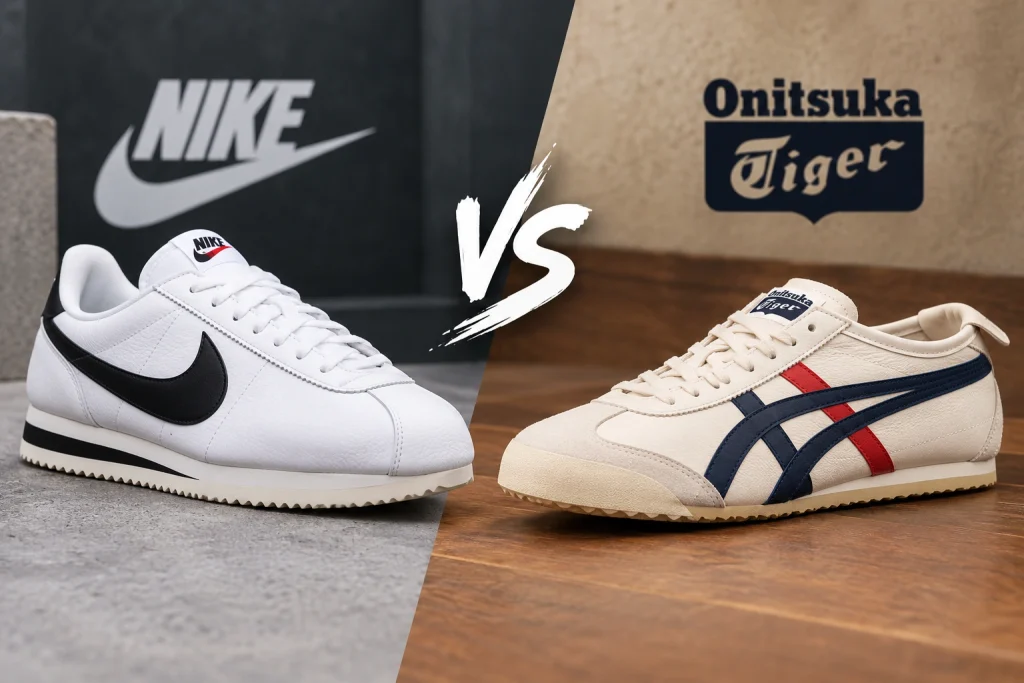
The Onitsuka Tiger Mexico 66 gets grouped with the Cortez frequently as a heritage running-shoe alternative to the Samba, and the comparison is a genuinely close one. Per Novelship, the Mexico 66 appeals more specifically to buyers who want heritage paired closely with comfort, while the Cortez leans into a retro look layered with more visibly modern design updates — current iterations feature a wider toe box and firmer side panels, giving it a somewhat fresher, more contemporary take on the same underlying 1970s design language.
Both shoes share genuine running-shoe origins rather than being repurposed sport-specific silhouettes borrowed from football or handball, which gives both of them a slightly different weight distribution and cushioning profile compared to the flatter, more minimal Samba and SL 72. If your priority is all-day wearability over pure visual minimalism, both the Cortez and the Mexico 66 tend to outperform the flatter terrace-style options in this category.
Nike Cortez vs. Puma Suede Classic And Palermo
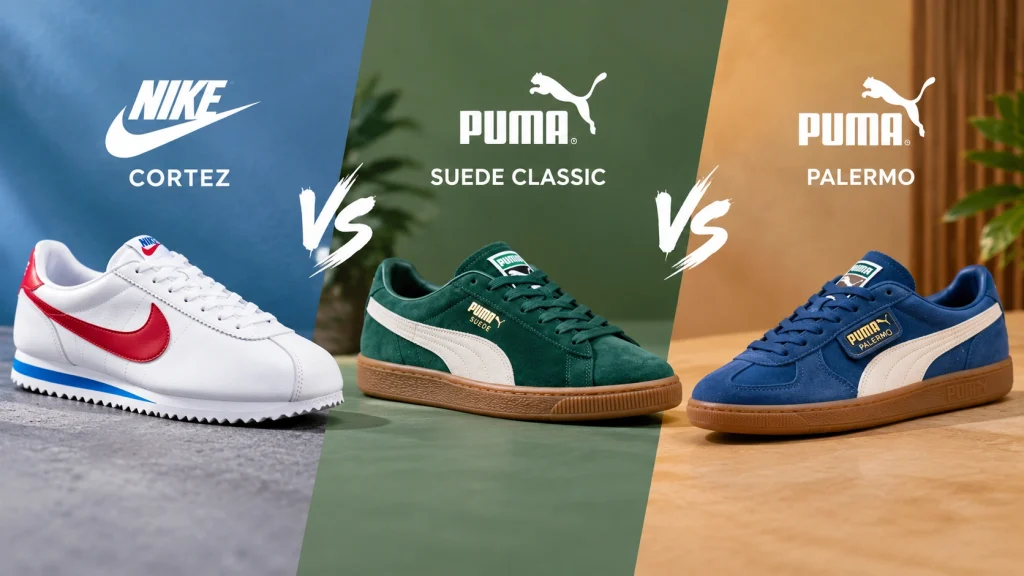
Puma’s retro lineup — spanning the long-running Suede Classic and the newer, more hyped Palermo — takes a bolder, more statement-driven approach than the Cortez’s understated simplicity. Novelship describes the Palermo specifically as the pick for anyone wanting a bolder overall statement, positioning it directly opposite the Cortez’s cleaner, more versatile everyday profile. If your personal style leans toward louder colorways, thicker branding, and more visual presence on the shoe itself, Puma’s current retro lineup generally delivers that more directly than the Cortez ever aims to.
The Suede Classic specifically, dating back to 1968, occupies a slightly different niche — a full suede upper that develops real character and patina over time, appealing to buyers who want a shoe that ages visibly and interestingly rather than staying pristine. The Cortez, made more commonly with leather or nylon-suede blends, tends to stay cleaner-looking for longer, which suits buyers who prefer a more polished, consistent appearance over time.
Where The Cortez Wins
Across nearly every comparison covered here, a consistent theme keeps emerging: the Cortez is repeatedly named the strongest heritage pick specifically because of its cultural significance and genuinely timeless design. Street Sneakers Vault explicitly calls it out as the best overall choice for anyone prioritizing retro heritage over pure trend-chasing, distinguishing it clearly from more football-terrace-coded options like the Samba or the lesser-known Field General.
The Cortez also carries a practical advantage that’s genuinely easy to overlook amid all the style comparisons: reliable availability. It’s sold routinely through Nike direct, Foot Locker, Finish Line, Kohl’s, Amazon, and Macy’s, without the frequent sellouts and inflated resale pricing that have plagued the Samba at various points over the past couple of years as demand repeatedly outpaced supply.
Where It Loses Ground
The Cortez isn’t the closest visual match to the Samba silhouette specifically, if that particular low-profile, gum-soled terrace look is what you’re actually trying to replace — shoes like the Nike Killshot 2 or the lesser-known Field General are generally considered closer substitutes for that exact aesthetic. The Cortez’s taller heel and more curved sole genuinely change how it sits against slim denim or wide-leg trousers compared to flatter, more minimal terrace-style shoes.
It also doesn’t carry quite the same wardrobe versatility for technical or streetwear-heavy rotations built around cargo pants and more athletic styling. Sources comparing post-Samba options specifically note that shoes like the Nike Vomero 5 or the ASICS Gel-Kayano 14 tend to pair better with cargo pants and more technical streetwear looks than any of the flatter 1970s-style trainers, the Cortez included — those shoes lean into a bulkier, more overtly “dad shoe” technical aesthetic that the Cortez’s clean running-shoe silhouette doesn’t attempt to replicate.
Price And Value Comparison
Worth noting across this whole category: the Cortez remains one of the more accessible options price-wise, with leather versions available as low as $76 and the standard lineup generally staying comfortably under $100. The Samba, by contrast, has seen inflated resale pricing during periods of peak demand, sometimes pushing well above its original retail price for popular colorways. The SL 72 and Onitsuka Tiger Mexico 66 generally sit in a similar affordable range to the Cortez, while Puma’s Palermo has occasionally commanded a premium closer to typical Samba pricing due to its current hype cycle.
The Bottom Line
Among retro sneakers, the Cortez occupies a genuinely specific lane: heritage-first, comfort-forward, and more distinctly American in its cultural reference points than its European terrace-style competitors. It’s not the closest match if you’re specifically trying to replace a Samba’s exact silhouette and low-profile look, and it’s not the boldest option available if you’re after something louder and more attention-grabbing like the Palermo. But for buyers who want a genuinely versatile, comfortable, and widely available shoe with real, documented design history behind it — rather than simply the newest silhouette to briefly dominate a single trend cycle before fading — it remains one of the strongest and most dependable picks in the current retro sneaker landscape.