

S
uper shoes have gone from elite-only gear to mainstream running equipment in less than a decade.Carbon-plate running shoes in 2026 now span every distance and budget, making the decision more complicated than ever. Moreover after reviewing independent lab data and real-world testing from multiple sources, it’s clear that these shoes genuinely work — but only for the right runner.Here’s what you need to know before spending $200 or more.
How Carbon Plates Actually Work
The carbon plate sits embedded in the midsole between layers of high-performance foam like Nike’s ZoomX or Adidas’ Lightstrike Pro. Therefore, when your foot loads the shoe during a stride, the stiff plate bends and snaps back returning energy and reducing the muscular effort needed to push off.
However, this benefit only activates at faster paces. In fact, most runners need to hit a certain effort level before the plate does its job efficiently. That said, the super foams surrounding the plate provide cushioning benefits at any pace.
Who Benefits Most
Runners chasing personal bests at half-marathon or marathon distances gain the most from these shoes. Additionally the propulsion effect helps sustain pace in the later miles when leg fatigue builds.As a result, most elite marathon records have been set in carbon-plated super shoes since 2019.
Carbon-Plate Running Shoes 2026: Best Picks By Use Case
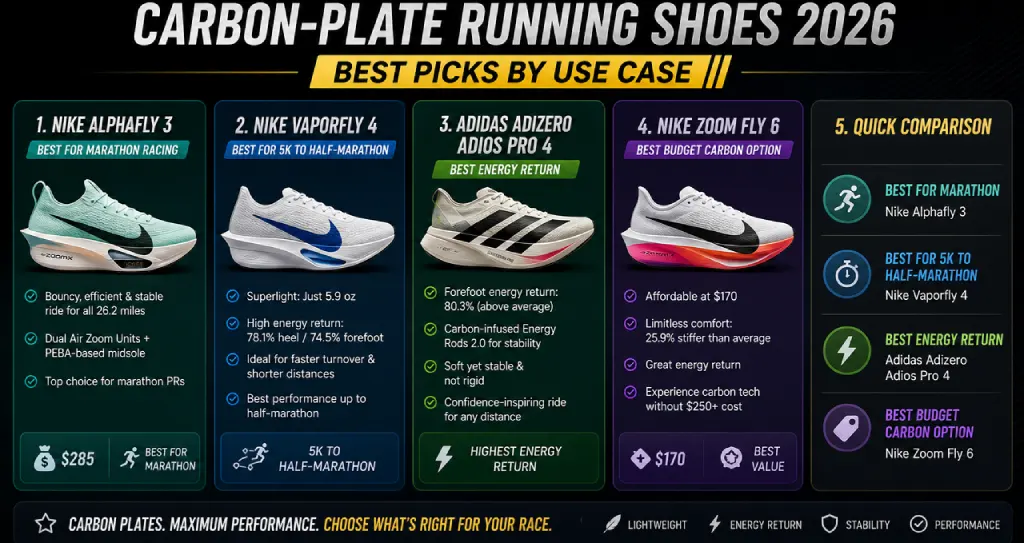
Nike Alphafly 3 Best For Marathon Racing
Testers consistently selected the Nike Alphafly 3 as the best all-around carbon-plated marathon racing shoe for its bouncy, efficient ride and relatively stable feel. Furthermore, its dual Air Zoom Units and PEBA-based midsole deliver exceptional energy return across all 26.2 miles.
At $285, it’s expensive. However, for runners chasing a marathon PR, no shoe currently outperforms it at the long-distance level.
Nike Vaporfly 4 Best For 5K To Half-Marathon
The Vaporfly 4 weighs just 5.9 oz and delivers energy return scores of 78.1% in the heel and 74.5% in the forefoot well above the average racer. Moreover, the snappier, lighter build suits faster turnover at shorter distances better than the heavier Alphafly.
In fact, RunRepeat lab testing confirmed the Vaporfly 4 performs best in distances up to a half-marathon, where its lower stack height still provides enough cushioning without slowing transitions.
Adidas Adizero Adios Pro 4 Best Energy Return
The Adios Pro 4’s forefoot delivered a massive 80.3% energy return in lab testing significantly above the 60.5% average among race shoes. Additionally, the carbon-infused Energy Rods 2.0 stabilize the soft Lightstrike Pro foam without making the ride feel rigid.
Beyond that, the Adios Pro 4 suits runners who want a confidence-inspiring, predictable ride across any race distance.
Nike Zoom Fly 6 Best Budget Carbon Option
At $170, the Zoom Fly 6 offers impressive energy return and what reviewers described as limitless comfort emerging only 25.9% stiffer than average in bend testing, making it more forgiving than most carbon racers.
Therefore, if you want to experience carbon-plate technology without a $250+ commitment, this is the most sensible entry point in 2026.
What Carbon Plates Won’t Do For You
Carbon shoes aren’t training shoes. Overall, their outsoles wear faster than standard trainers, and their performance materials degrade more quickly under daily mileage.
Furthermore, heel strikers need to choose carefully some designs expose the midsole at the heel, which wears down faster and reduces efficiency. Additionally, runners with stability needs should consider that most carbon racers run narrow and prioritize forward propulsion over lateral control.
Final Thoughts
Carbon-plate running shoes in 2026 deliver real, measurable performance gains but only under the right conditions. Therefore, if you race seriously at half-marathon or marathon distance, investing in one of these shoes makes complete sense.
Moreover, save them for race day and key workouts don’t burn through them in daily training. In fact, most coaches recommend keeping a carbon shoe rotation of 200 to 400 miles maximum before performance drops off. Finally, match the shoe to your distance, foot strike, and pace not just the brand name on the box.

