

W
alk into a running store with flat feet and you’ll probably hear words like “stability,” “pronation,” and “motion control” thrown around.It’s easy to feel like you need a specialist shoe. Sometimes you do, and sometimes you don’t.This guide walks through the decision step by step, so you can choose with confidence instead of guessing.
Step 1: Ask Whether You Need A Special Shoe At All

Flat feet describe the shape of your arch.They don’t automatically mean you need correction. Shoe Station has a blunt piece of advice: if you’ve been running pain-free in neutral shoes for years, don’t switch to stability just because you have flat feet. Karavel makes a similar point, saying that if your feet are flexible and don’t hurt, a neutral shoe may feel better, and the only reliable test is trying both on your own feet.
On the other hand, if running leaves your arches, shins, or knees sore, a stability shoe is the usual starting point.
Step 2: Learn What Kind Of Flat Feet You Have
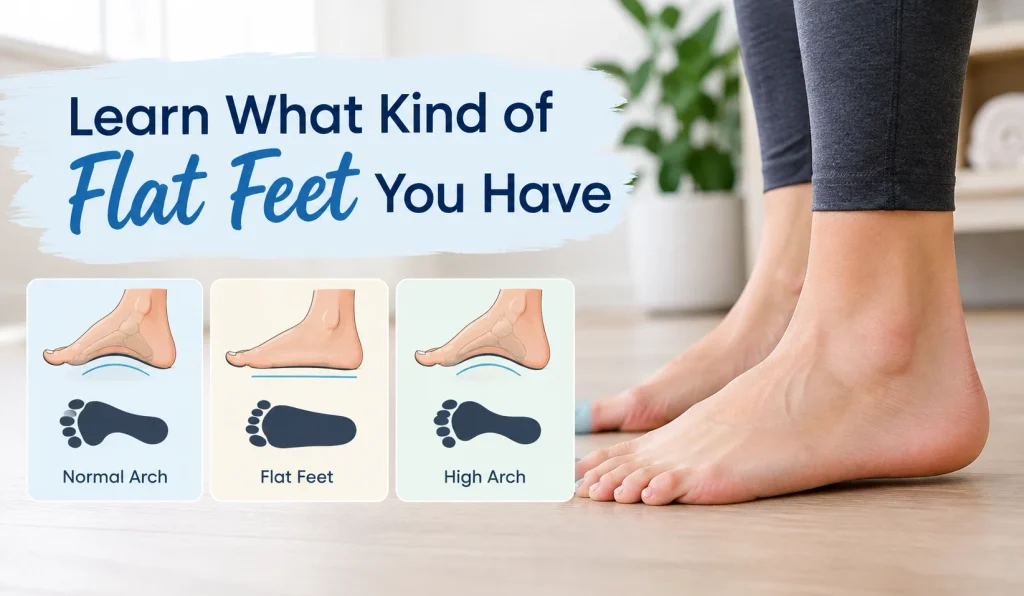
Not all flat feet are the same. Marathon Handbook explains that with flexible flat feet, you may see an arch when your foot is off the ground, but it flattens out as soon as you stand. With rigid flat feet, your foot looks flat whether or not it’s bearing weight.
Two simple at-home checks can help:
- The wet foot test. Step onto a paper bag, piece of cardboard, or dark towel with a wet foot. A full, wide footprint with little or no arch cutout suggests low arches, while a thin curve suggests a higher arch.
- The wear pattern. Look at the soles of your old running shoes.Heavy wear along the inside edge points toward overpronation.
These checks are only clues. A gait analysis at a running store, where someone watches you run, is more reliable.
Step 3: Understand Neutral vs. Stability
Neutral shoes rely on cushioning and let your foot move naturally.Stability shoes add features like medial posts or guide rails that slow the foot’s inward roll, and they tend to have a firmer platform.RunRepeat notes that stiffer shoes are usually better for flat feet, since flat feet often appreciate the extra support a stiffer platform provides. It also points out that stability shoes tend to be a bit heavier than neutral ones, which is the trade-off for the extra support.
Many runners with flat feet overpronate and prefer stability shoes, but some do fine in neutral shoes because they don’t overpronate much. RunRepeat adds that the lowest levels of stability are found in so-called stable neutral shoes, which can be a good middle ground.
Step 4: Know What Features To Look For
When you’re comparing shoes, check for:
- A stable platform. Fit2Run points to a structured cushion with a wide base, or something like the H-Frame found in the HOKA Gaviota and Arahi.
- Moderate to max cushioning, which Fit2Run calls a key piece for flat feet.
- A firm heel counter, which helps hold your heel in place.
- Width options. Runners with flat feet often have a wider base, and Fit2Run suggests newer runners look for a wider width for a more stable platform.
Step 5: Get The Fit Right
Fit matters more than any arch label. Fit2Run says as much: fit is the focus. A few practical tips:
- Try shoes on later in the day, when your feet are slightly swollen.
- Leave about a thumb’s width of room in front of your longest toe.
- Walk and jog around the store if you can, and pay attention to any rubbing or pressure.
- Make sure the shoe feels supportive in the arch without feeling like it’s pushing against it.
Step 6: Shortlist A Few Options
These shoes come up repeatedly in stability roundups for flat feet:
- Brooks Adrenaline GTS, which Fit2Run describes as balancing cushioning and reliable stability.
- HOKA Arahi, often called the stability version of the Clifton.
- ASICS Gel-Kayano, a plush stability option.
- Saucony Guide, a lighter-feeling, gentler stability shoe.
- Brooks Glycerin GTS, which adds more cushioning to Brooks’ stability setup.
Treat these as starting points, not verdicts. Your own foot is what counts.
Step 7: Break Them In And Keep Them Healthy

Karavel suggests building mileage gradually, since a new shoe and new running load at the same time can lead to soreness.It also recommends replacing running shoes before the midsole breaks down, because worn shoes lose the support flat feet rely on. If you still have arch discomfort, an arch-support insole can help, either on its own or alongside a stability shoe.
When To See A Professional
If you have persistent pain in your arches, heels, shins, or knees, or if you can’t find a shoe that feels comfortable, a podiatrist or a running store with gait analysis can give you a clearer answer than a shopping guide can. Pain is a signal worth getting checked rather than working around.
The Bottom Line
Choosing a running shoe with flat feet comes down to a short process: decide whether you actually need extra support, figure out how your foot behaves, pick between neutral and stability, and prioritize fit above everything else.If you’re pain-free in what you’re wearing, there’s no need to change. If you’re sore, a well-fitted stability shoe is a sensible place to start.

