

A
t first glance, a basketball shoe is a basketball shoe.But the surface you play on changes what the shoe needs to do.A polished gym floor and a concrete park court are very different places, and the shoes built for each reflect that. Here’s how they differ, what happens if you mix them up, and how to choose.
The Short Answer
The biggest difference is the outsole. Indoor shoes use softer rubber for grip on smooth wood, while outdoor shoes use harder, thicker rubber that can handle rough surfaces.The rest of the shoe, including cushioning, upper strength, and weight, follows from that.
Indoor Basketball Shoes: Built For Grip And Speed
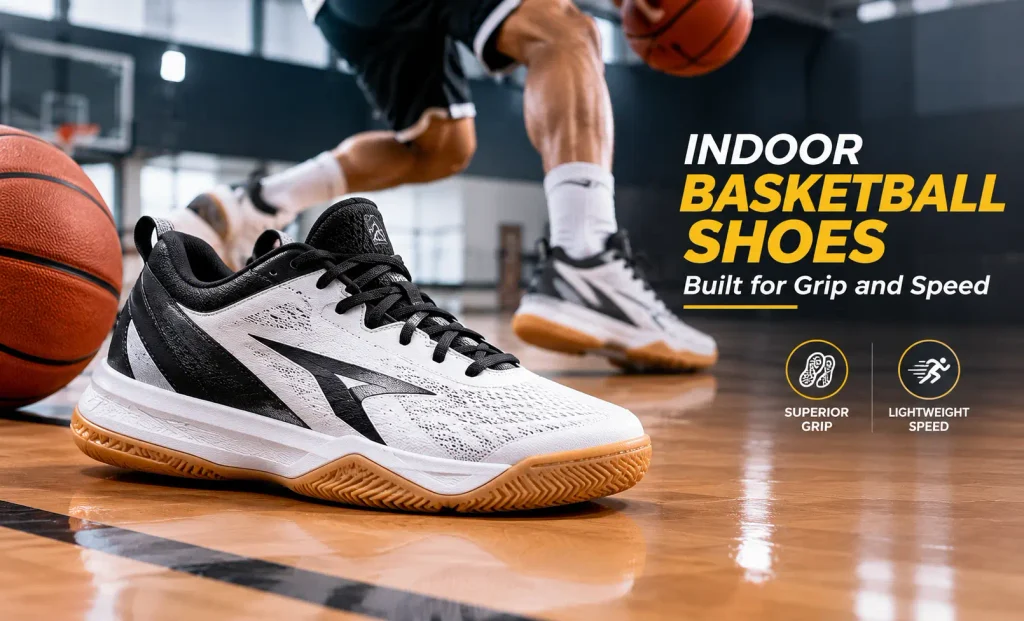
According to 361 Sport, indoor shoes typically have softer, more flexible rubber that offers better traction on slick court surfaces, along with a more complex tread pattern. Toby’s Sports says they’re designed to maximize traction on hardwood courts, making them a good fit for competitive indoor games, quick cuts, and fast-paced play.
The trade-off is wear. Soft rubber that grips hardwood well will wear down quickly on rough surfaces.
Outdoor Basketball Shoes: Built To Last
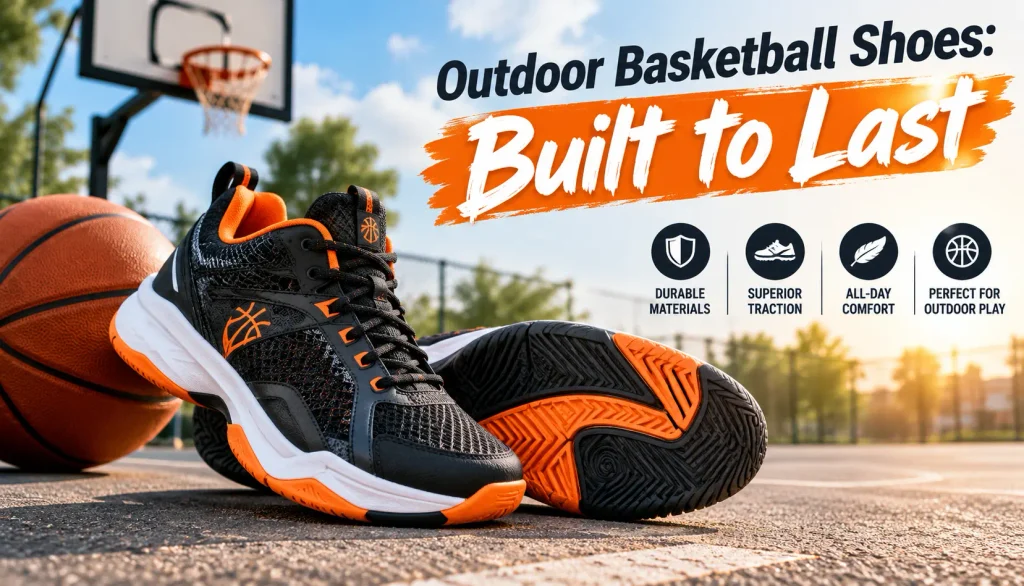
Outdoor shoes have a very different job. A guide from Under Armour says they tend to have increased cushioning, a more durable outer sole, and a traction pattern that is neutral or slightly inverted. That inverted pattern matters because outdoor surfaces can easily grind down a raised tread. Herringbone patterns are a popular choice.
Other features include:
- Harder, thicker rubber. It resists abrasion and lasts longer on concrete and asphalt.Kheladesk notes that rubber with higher durometer readings, meaning harder rubber, typically lasts longer outdoors than softer indoor compounds.
- Extra cushioning. Rough courts put more stress on your joints when you jump and land, so cushioning helps absorb the impact.
- Sturdier uppers. Under Armour says the materials are often heavier and more rigid, which means outdoor shoes can take longer to break in and are often heavier overall.
Side by Side
| Feature | Indoor | Outdoor |
|---|---|---|
| Outsole rubber | Softer, more flexible | Harder, thicker |
| Tread | Finer, more intricate | Deeper, widely spaced, often neutral or inverted |
| Best surface | Hardwood | Concrete, asphalt |
| Durability | Lower on rough courts | Higher |
| Weight | Often lighter | Often heavier |
| Price | Often higher | Often lower |
On price, Athletoes says outdoor shoes tend to cost less because hard rubber is cheaper than the specialized soft compounds used in indoor shoes, and because outdoor shoes prioritize durability over the latest expensive cushioning tech.
What Happens If You Mix Them Up?
Indoor shoes outside. Sports Gear Swag says the roughness of outdoor courts will wear down the soles, reduce traction, and shorten the lifespan of indoor shoes. A short outdoor session won’t ruin a pair, but regular use will, and even brief outdoor use can compromise the precise grip indoor shoes are designed for.
Outdoor shoes inside. Athletoes says outdoor shoes will survive indoor play just fine, though the harder rubber isn’t tuned for the same bite on a polished floor, so grip may not feel as sharp. For casual indoor play it’s usually fine.
Hybrids. Athletoes also mentions hybrid shoes, which typically use rubber harder than pure indoor models but softer than pure outdoor ones. They’re a reasonable compromise if you play in both places.
How To Tell Which Is Which Before You Buy
Marketing doesn’t always make it obvious. Athletoes suggests a few cues:
- Terms like “durable rubber,” “XC rubber,” “abrasion-resistant,” or “outdoor compound” suggest an outdoor shoe.
- “Herringbone” or “multi-surface” can be misleading, since many indoor shoes use a herringbone pattern too.
- No mention of durability usually means it’s an indoor shoe.
You can also look at the outsole itself. Huff Sports says indoor shoes have a finer, more intricate pattern, while outdoor shoes often have a harder compound with a herringbone or deep wave pattern.
Examples Mentioned In Roundups
These come from shopping and review sites and change every season, so treat them as starting points. Kheladesk’s 2026 roundup lists the Jordan Luka 77 (around $100 to $120) as a budget outdoor pick, noting its durable rubber outsole built for concrete and asphalt, and the Nike Cosmic Unity 3 (around $90 to $170, often on sale) for stability and durability on rough surfaces.Athletoes lists the Under Armour Lockdown as having a durable outsole with good outdoor grip. A separate 2026 roundup from Kicksown also named a few outdoor-specific options and prioritized outsole durability and hard-court traction.
Which Should You Buy?
- You play mostly outdoors: buy outdoor shoes, or hybrids built for concrete.
- You play mostly indoors: go for indoor shoes with soft rubber and strong grip.
- You play both regularly: the usual advice is to have two pairs. Huff Sports says it’s recommended to have specialized shoes for each. A hybrid is the compromise if you only want one.
- You’re on a budget: an outdoor shoe is often the cheaper choice, and it will hold up better for casual play.
Making Your Shoes Last
A few habits help whichever you choose. Rotate pairs if you can, so cushioning has time to recover.Check the outsole regularly, and replace the shoes once the tread is smooth or the cushioning feels flat.Keep indoor shoes for the gym and avoid walking on gritty surfaces in them.
A Note On These Sources
Many of these comparisons come from retailers and sports blogs that sell shoes, and some are a few years old. The general points, softer rubber indoors and harder rubber outdoors, are consistent across all of them, but specific models, prices, and rankings change quickly.
The Bottom Line
Indoor shoes are built for grip on hardwood, outdoor shoes are built to survive rough courts, and using the wrong one costs you either performance or shoe life.If you play in both places, two pairs or a good hybrid is the sensible approach. If you play in only one, buy for that surface and your shoes will last longer and feel better.